
Medicare is one of the most important programs for retirees and their families, yet it can also be one of the most confusing. With multiple parts, strict enrollment deadlines, and coverage limits that surprise many people, understanding Medicare is essential for making informed health and financial decisions.
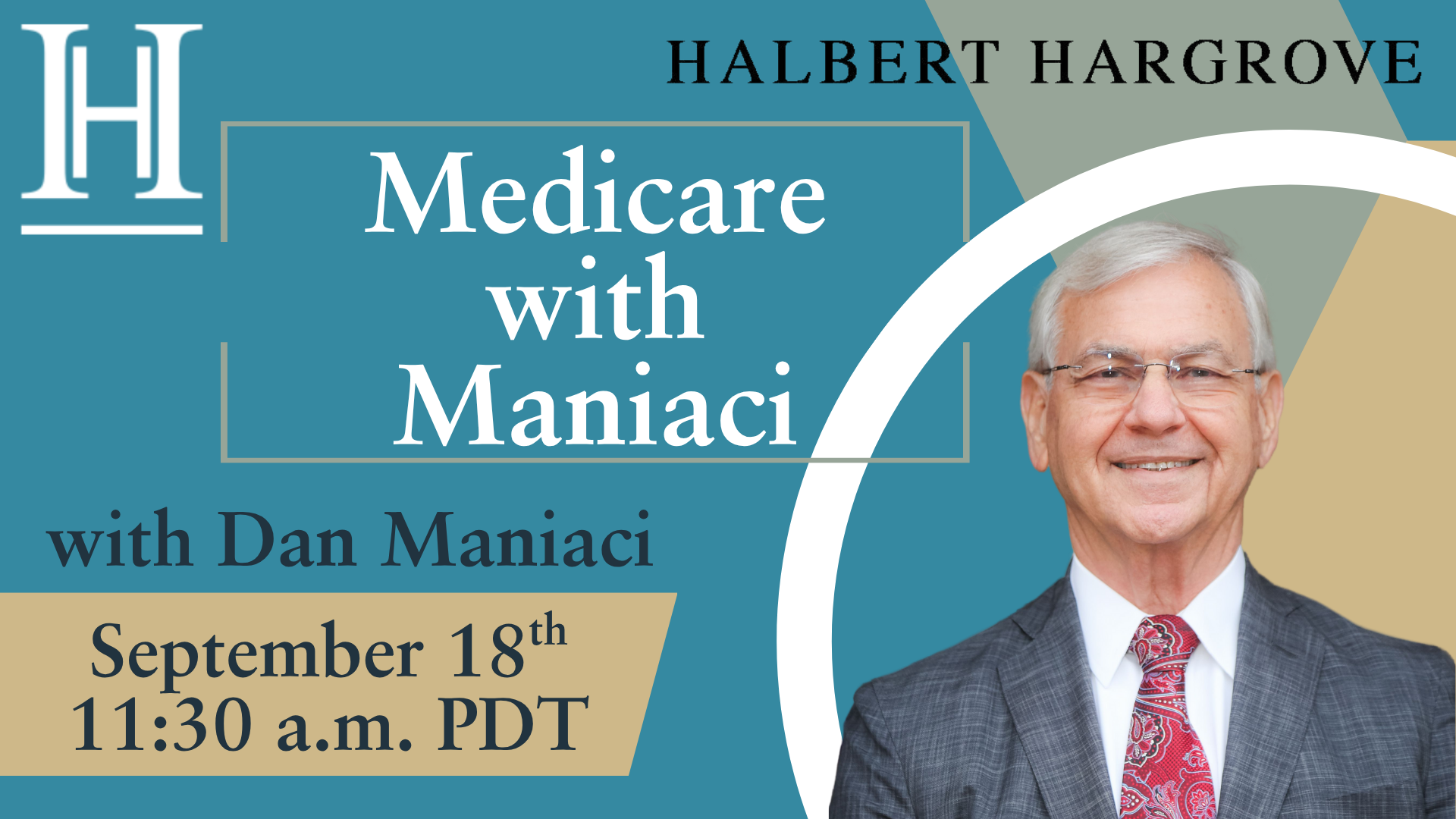
This guide is based on insights shared in an educational webinar with Monica Fernandez, a Medicare specialist with over 20 years of experience, and Dan Maniaci, who highlighted the financial realities of long-term care. Together, they explained eligibility rules, enrollment timelines, and what Medicare does—and does not—cover.
If you’re turning 65 soon, working past retirement age, or helping a loved one transition, this post can help walk you through the essentials.
Who Is Eligible for Medicare?
Medicare eligibility is based on citizenship, age, and certain health conditions. You qualify if you are:
- A U.S. citizen or legal resident who has lived in the U.S. for at least five consecutive years
- Age 65 or older
- Under 65 with a qualifying disability
- Any age with End-Stage Renal Disease (ESRD)
If you are receiving disability benefits for 24 consecutive months, Medicare automatically enrolls you in Part A (hospital coverage).
Breaking Down Medicare Coverage Options
Part A: Hospital Insurance
Part A covers hospital stays, skilled nursing care, hospice care, and some blood transfusions. Most people don’t pay a premium if they’ve worked at least 40 quarters (10 years). The 2025 deductible is $1,676, though this will change for 2026.
Part B: Medical Insurance
Part B covers doctor visits, outpatient care, ambulance services, lab work, and preventive services. The standard premium for 2025 is $185 per month. Higher-income earners pay more based on their income two years prior. Medicare covers 80% of approved costs, leaving beneficiaries responsible for the remaining 20%.
Part D: Prescription Drug Plans
Part D is provided by private insurers and covers prescription drugs. Each plan has its own formulary (list of covered drugs) and cost structure. Important notes:
Enrollment is required at age 65 unless you have “creditable” drug coverage elsewhere.
- Late enrollment may result in penalties.
- As of 2025, once your combined spending reaches $2,000, you enter catastrophic coverage and pay nothing for the rest of the year.
Part C: Medicare Advantage
Medicare Advantage (Part C) combines Parts A, B, and often Part D into one plan offered by private insurers. Many include dental, vision, and hearing benefits. However, these plans typically use restricted networks, require referrals, and benefits can change year to year.
Medicare Supplement (Medigap) Plans
Medigap plans help cover costs not paid by Original Medicare, such as deductibles, co-pays, and the 20% coinsurance from Part B. Plans are standardized by letter, with Plan F and Plan G being the most popular.
- Plan F: Covers nearly all gaps but is only available to those who turned 65 before January 1, 2020.
- Plan G: Available to new enrollees; similar to Plan F but does not cover the Part B deductible.
Enrollment in a Medigap plan is easiest during the six-month window after you first enroll in Part B. Applying later can result in medical underwriting and possible denial.
Medicare Enrollment Periods to Know
Medicare enrollment is time-sensitive. Missing deadlines can potentially mean penalties or gaps in coverage. Key periods include:
- Initial Enrollment Period: Seven-month window around your 65th birthday (three months before, your birthday month, and three months after).
- Annual Enrollment Period: October 15 – December 7. Make plan changes for the next year.
- Open Enrollment Period: January 1 – March 31. Switch Medicare Advantage plans or return to Original Medicare.
- Special Enrollment Periods: Triggered by events like leaving employer coverage or moving.
Important: COBRA is not considered creditable coverage for Part B. Relying on COBRA after 65 can result in penalties.
Medicare and Long-Term Care Planning
One of the biggest misconceptions is that Medicare covers long-term care. In reality, Medicare only covers limited skilled nursing care (up to 100 days). Custodial care—such as help with bathing, dressing, or dementia support—is not covered.
Average costs can be steep:
- Nursing facilities in California: $400–$500 per day ($12,000–$14,000 per month)
- Home health aides: Around $40 per hour
These expenses can quickly deplete savings and can create emotional strain for caregivers. Planning ahead with supplemental insurance or dedicated long-term care strategies is crucial for financial stability and peace of mind.
Key Medicare Takeaways for 2025
- You qualify for Medicare at 65, earlier with a disability, or with ESRD.
- Parts A, B, C, and D cover different aspects of care—understanding their limits is essential.
- Medigap can fill cost gaps but is best secured during your initial enrollment window.
- Enrollment deadlines matter—missing them can potentially mean lifelong penalties.
- Medicare does not cover most long-term care, so plan separately.
- Working past 65 requires comparing employer coverage with Medicare to avoid gaps.
Planning Ahead for Your Medicare Coverage
Medicare is not one-size-fits-all. Your best approach depends on your age, work status, income, medications, and future care needs. Because rules and coverage options change every year, reviewing your plan annually is key.
For guidance tailored to your situation, we encourage you to connect with a Halbert Hargrove advisor. Our advisors can help clients evaluate Medicare coverage, compare costs, and prepare for long-term care planning as part of their broader financial strategy.
Halbert Hargrove Global Advisors, LLC (“HH”) is an SEC registered investment adviser with its principal place of business in Long Beach, California. HH may only transact business in those states in which it is registered, notice filed, or qualifies for an exemption or exclusion from registration or notice filing requirements. Registration does not imply a certain level of skill or training. For information pertaining to the registration status of HH, please contact HH or refer to the Investment Adviser Public Disclosure web site (www.adviserinfo.sec.gov). Additional information about HH, including our registration status, fees, and services can be found at www.halberthargrove.com.
This blog is provided for general information purposes only. No portion of the content serves as the receipt of, or as a substitute for, personalized investment advice from HH or any other investment professional of your choosing. It should not be construed as a solicitation to offer personal securities transactions or provide personalized investment advice. Different types of investments involve varying degrees of risk, and it should not be assumed that future performance of any specific investment or investment strategy, or any non-investment related or planning services, discussion or content, will be profitable, be suitable for your portfolio or individual situation, or prove successful. Neither HH’s investment adviser registration status, nor any amount of prior experience or success, should be construed that a certain level of results or satisfaction will be achieved if HH is engaged, or continues to be engaged, to provide investment advisory services. HH is neither a law firm nor accounting firm, nor does it serve as an attorney, accountant, or insurance agent. No portion of its services, or this content, should be construed as legal or accounting advice. HH does not prepare legal documents or tax returns, nor does it sell insurance products. No portion of the content should be construed by a client or prospective client as a guarantee that he/she will experience a certain level of results if HH is engaged, or continues to be engaged, to provide investment advisory services. All opinions or views reflect the judgment of the author as of the publication date and are subject to change without notice. All information presented herein is considered to be accurate at the time of writing, but no warranty of accuracy is given and no liability in respect of any error or omission is accepted.