Key Takeaways
- Goal setting is more effective when it starts with personal values and purpose rather than jumping straight to outcomes. Clear values can help make priorities and decisions easier throughout the year.
- Breaking annual goals into quarterly priorities and weekly actions can help reduce stress and create consistent progress through repeatable habits.
- Focusing on controllable behaviors and anticipating obstacles in advance helps increase follow-through and helps make goals more sustainable over time.
How to Move from Good Intentions to Consistent Action
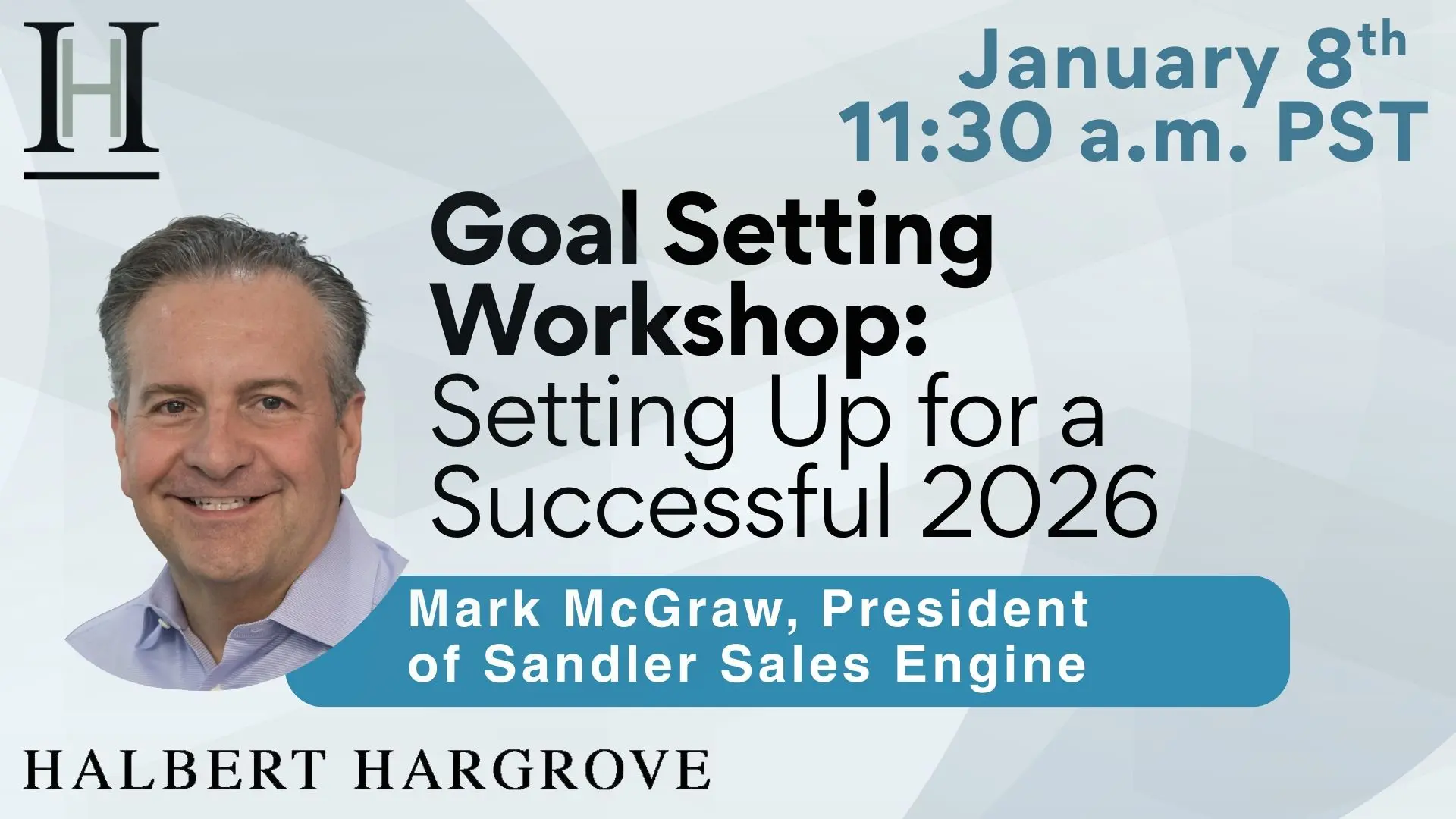
Many people start a new year with good intentions, but without a clear process, those intentions typically don’t turn into lasting progress. In a goal setting session led by Mark McGraw of Sandler Sales Engine, participants were guided through a practical framework for building meaningful goals and translating them into weekly habits designed to support long-term success.
Rather than focusing only on outcomes, the session emphasized clarity, structure, and consistency. The message was simple: goals are easier to achieve when they are rooted in values, broken into manageable pieces, and supported by daily and weekly actions.
Watch the recording of the session on YouTube.
Why Goal Setting Often Gets Avoided
Mark began by addressing why many people avoid goal setting altogether. In his experience, it usually comes down to one of three reasons:
- The first is fear of failure. Writing a goal down creates accountability, and some people worry they will fall short. By avoiding the process, they avoid the possibility of disappointment.
- The second is fear of success. Achieving a goal can raise expectations, both internally and externally. For some, success feels uncomfortable, especially if it changes dynamics with family members or peers.
- The third reason is much simpler. Many people never set goals because they lack a clear process or dedicated time to do the work.
Once these barriers are recognized, Mark noted that they often lose their power. With a structured approach and space to think, people are more willing to engage and move forward.
Starting With Values Instead of Outcomes
The foundation of the framework begins with values. Before setting goals, participants were encouraged to identify what matters most to them and what they want more of in their lives in 2026.
Mark emphasized that values are personal. They vary from person to person, and there is no right or wrong list. The exercise focused on narrowing down a small number of core values and identifying the actions that reflect those values in everyday life.
When values are clear, decisions can become easier. Goals feel more relevant. Daily actions can feel purposeful instead of forced. This step helps ensure that goals are aligned with the life someone wants to live, not just the results they want to achieve.
Defining Goals Across Key Areas of Life
Once values are identified, the next step is defining annual outcomes. Mark outlined several major areas that typically make up a person’s life, including family, career or business, social connection, physical health, finances, personal development, and overall well-being.
Rather than creating an overwhelming list, participants were encouraged to think about two or three meaningful outcomes in each area. The goal is not perfection across every category but intentional progress in the areas that matter most.
This approach can help avoid tunnel vision. It recognizes that long-term fulfillment comes from balance and attention across multiple parts of life, not just professional success or financial results.
Breaking Big Goals Into Quarterly Focus
Large goals can often feel overwhelming when viewed all at once. To address this, Mark introduced the idea of breaking annual goals into quarterly priorities.
Instead of thinking in terms of an entire year, participants were encouraged to focus on ninety-day sprints. This shorter time frame creates urgency, clarity, and momentum. It also makes goals feel more realistic and achievable.
Quarterly projects can act as a bridge between long-term intentions and day-to-day effort. They allow people to focus on what matters now, without losing sight of where they are heading.
From Plans to Action With Weekly Habits
One of the most practical parts of the session focused on turning plans into action. Mark described this as creating a weekly “cookbook.”
The idea is simple. If someone knows the actions they need to take on a weekly basis, they are far more likely to achieve their goals. Outcomes cannot always be controlled, but behaviors can.
Participants were encouraged to identify the small, repeatable actions that support their most important quarterly priorities. These actions become the habits that drive results over time.
By focusing on process instead of outcomes, people reduce pressure and increase consistency. Progress becomes something that happens naturally through repeated effort.
Using Focus to Avoid Overwhelm
Mark also introduced the concept of focus through prioritization. When looking at a list of quarterly projects, not all of them carry equal weight.
By identifying the small percentage of projects that drive the majority of results, participants can direct their energy where it matters most. Completing the most important priorities creates meaningful progress, even if everything on the list does not get done.
This approach helps prevent burnout and reduces the feeling of constantly falling behind.
Anticipating Obstacles Before They Appear
One of the final tools shared in the session was inversion thinking. Instead of only focusing on success, participants were encouraged to imagine what failure might look like.
By identifying the reasons a goal might fail, such as lack of time, energy, or follow-through, people can create rules and habits that reduce those risks. These preventative measures make it easier to stay on track when challenges arise.
This process shifts goal setting from optimism alone to preparation and resilience.
Why This Goal Setting Framework Works Over Time
Throughout the session, Mark emphasized that this is not a one-time exercise. The framework is designed to be revisited and updated regularly.
By reviewing goals quarterly and adjusting actions weekly, people create a rhythm that supports growth and accountability. Over time, this structure helps transform goals from abstract ideas into lived experiences.
The result is not just achievement, but clarity and direction across all areas of life.
Putting the Process Into Practice
Goal setting does not require perfection. It requires intention, consistency, and a willingness to reflect and adjust. By starting with values, defining meaningful outcomes, breaking them into manageable pieces, and committing to simple weekly actions, people can build momentum that lasts beyond the first few weeks of the year.
This approach encourages progress without pressure and structure without rigidity. It offers a practical way to plan for 2026 while staying grounded in what matters most.
Plan Your Financial Goals With the Support of Halbert Hargrove
Setting meaningful goals is easier when you have the right structure and accountability. Your Halbert Hargrove advisory team can help you connect financial planning with your broader life goals, prioritize what matters most, and create a financial plan that supports your long-term goals. Reach out to your advisor to continue the conversation and put your goals for 2026 into action.
Disclosure:
Halbert Hargrove Global Advisors, LLC (“HH”) is an SEC registered investment adviser with its principal place of business in Long Beach, California. HH may only transact business in those states in which it is registered, notice filed, or qualifies for an exemption or exclusion from registration or notice filing requirements. Registration does not imply a certain level of skill or training. For information pertaining to the registration status of HH, please contact HH or refer to the Investment Adviser Public Disclosure web site (www.adviserinfo.sec.gov). Additional information about HH, including our registration status, fees, and services can be found at www.halberthargrove.com.
This blog is provided for general information purposes only. No portion of the content serves as the receipt of, or as a substitute for, personalized investment advice from HH or any other investment professional of your choosing. It should not be construed as a solicitation to offer personal securities transactions or provide personalized investment advice. Different types of investments involve varying degrees of risk, and it should not be assumed that future performance of any specific investment or investment strategy, or any non-investment related or planning services, discussion or content, will be profitable, be suitable for your portfolio or individual situation, or prove successful. Neither HH’s investment adviser registration status, nor any amount of prior experience or success, should be construed that a certain level of results or satisfaction will be achieved if HH is engaged, or continues to be engaged, to provide investment advisory services. HH is neither a law firm nor accounting firm, nor does it serve as an attorney, accountant, or insurance agent. No portion of its services, or this content, should be construed as legal or accounting advice. HH does not prepare legal documents or tax returns, nor does it sell insurance products. No portion of the content should be construed by a client or prospective client as a guarantee that he/she will experience a certain level of results if HH is engaged, or continues to be engaged, to provide investment advisory services. All opinions or views reflect the judgment of the author as of the publication date and are subject to change without notice. All information presented herein is considered to be accurate at the time of writing, but no warranty of accuracy is given and no liability in respect of any error or omission is accepted.