By JC Abusaid, CEO/President featured in Forbes Business Council
Becoming a CEO was never on my career roadmap. My goals had always been to work hard, advance in my career and provide for my family. Leading the firm wasn’t part of my plan. In fact, I never expected it.
When the opportunity arrived, I had doubts. As I stepped into the shoes of a strong predecessor, I was concerned about whether I could live up to expectations, especially since I lacked the traditional CEO background. However, over time, I learned that leadership isn’t about being the perfect successor or having all of the answers. It’s about growth, humility and trusting yourself.
Although being a CEO doesn’t come without its challenges, I have also learned a tremendous amount along the way. Read on for five key lessons I have learned that other CEOs can apply.
1. Confidence
I started working at my firm, Halbert Hargrove, back in 1996. Over the past 28 years, I’ve held many different roles, ultimately moving from president and COO to CEO in 2021. That transition was challenging. I experienced imposter syndrome daily—which can involve feeling that you’re never good enough and constantly have to prove yourself. I later learned I wasn’t alone: According to Korn Ferry, 40% of CEOs struggle with imposter syndrome.
I also had to navigate a new power dynamic. Many of the employees I had hired over the years already viewed me as their supervisor, but I also had colleagues and peers who needed to adjust to seeing me in this new role.
To overcome both of these challenges, work on your confidence. You’ll need to build trust, set boundaries and establish authority without creating friction. Earning respect means standing firm against unfair challenges while staying anchored to your values. I personally found it helpful to remind myself that I was both deserving and capable. As leaders, we set the tone. If we second-guess ourselves, others will likely do the same. What helped me move forward was treating confidence like a habit until the progress eased the doubt.
2. Being True To Yourself
When I became CEO, I felt pressure to fill the previous CEO’s shoes—be a great orator, a rock star. That wasn’t me. What I learned is that what got you here is what will keep you here. I was chosen for a reason. While my strengths were different, I leaned in. My focus on people and our culture became my superpower.
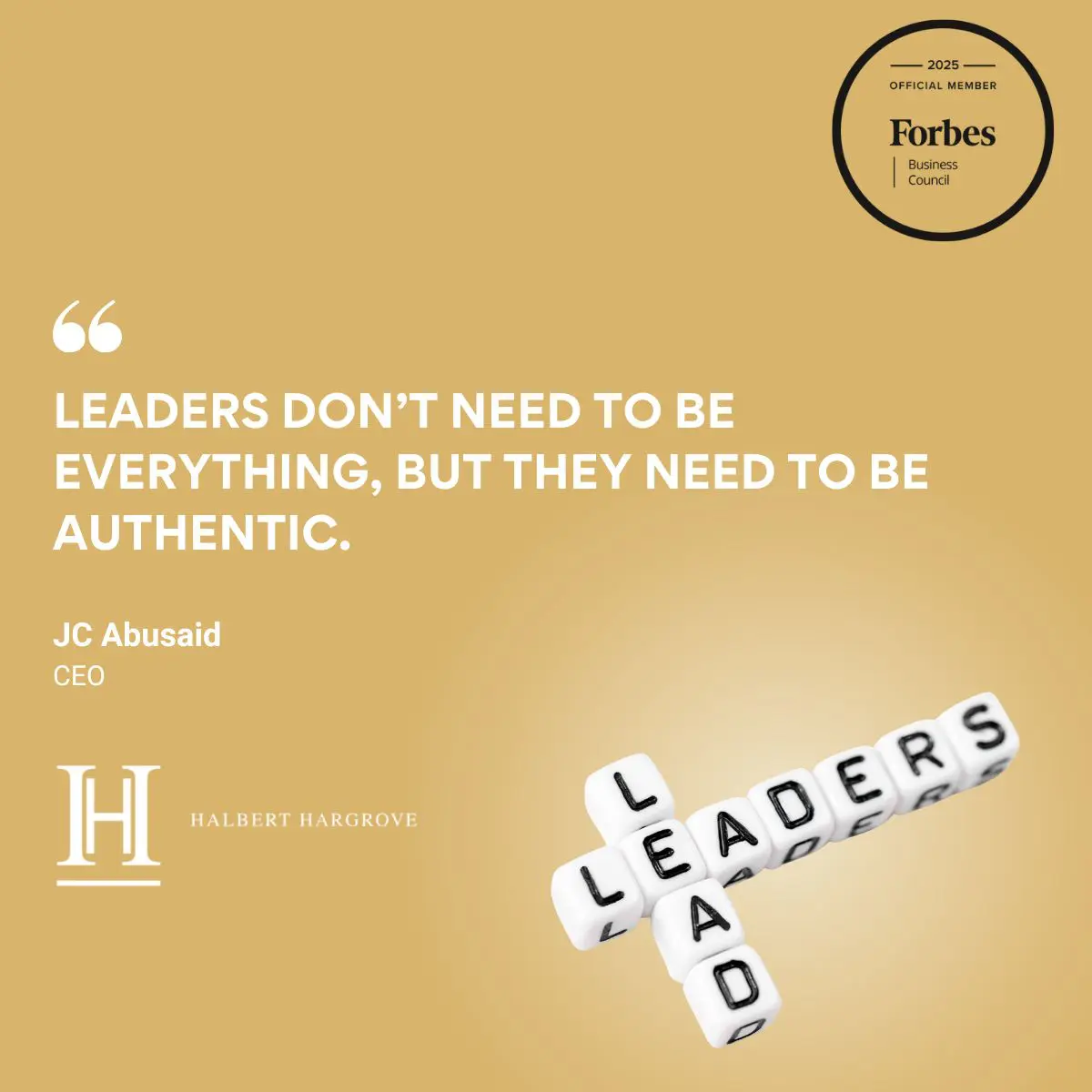
The sooner you lean into who you are instead of who you think you should be, the stronger the firm will likely become. Leaders don’t need to be everything, but they need to be authentic.
3. Humility
As CEO, it’s overwhelming to think you control the whole firm. The truth is that you don’t, and you shouldn’t.
I learned that my board and senior staff weren’t obstacles—they were guardrails. Initially, I sometimes took pushback as a challenge to my authority, but over time, I recognized it as a sign of genuine commitment. As CEO, the goal isn’t to have all the answers—it’s to foster an environment where the best ideas can surface.
Research covered by the Harvard Business School review reinforces this lesson, noting the value in CEOs who actively listen, show empathy and foster alignment among their teams. For me, that has included continuing to work closely with our previous CEO, who now serves as a board member. His perspective challenges my thinking, which ultimately strengthens my decisions.
4. Finding Your Voice
For years, my leadership style was characterized by quietness. I believed in leading by example: “Watch what I do, not what I say.” But as CEO, silence is not an option. People want to know what you’re thinking and why you’re doing what you do. Communication isn’t about performance—it’s about connection.
The “listen first, speak last” approach is effective because it encourages leaders to listen and creates an environment that fosters the emergence of stronger ideas. In my meetings, I make it a point to let the team speak first—giving their voices room to shape the conversation and ensuring my perspective supports, rather than overshadows, theirs.
5. Trust
At first, I tried to take on too much myself. One of my biggest mistakes was delaying setting up a reporting structure and pulling away from the team. I thought I was protecting them from added pressure, but instead, I left them without direction, which only created confusion. It was a hard but necessary lesson: Structure is not about control. It’s about giving people the clarity they need to do their best work.
The turning point came for me when I put more trust in my employees, formalized reporting processes and began delegating significant initiatives. To my surprise, most tasks were executed better than I could have done myself. Delegation is intimidating at first, but watching others grow is also one of the most rewarding parts of a CEO’s job. It also frees you up to focus on the bigger picture. Today, nothing makes me prouder than watching my employees thrive because I gave them the space to own their work.
Finding Your Footing
I’ve realized that the role of a CEO is never static. Your focus will need to evolve as your industry continues to shift.
But growth isn’t just about navigating change—it’s about people. Staying adaptable also means leading with empathy. Research shows that leaders who “build relationships through understanding, championing, and advocating team members … improve the culture of their organizations and increase the odds of having a strong workplace community by 269%.” That statistic is a powerful reminder that no matter how much the tools evolve, culture and connection remain the real drivers of performance.
The hardest lesson for me has been recognizing that leadership isn’t about proving yourself every day—it’s about creating the conditions for others to succeed. My hope for new leaders is this: Don’t wait as long as I did to believe in yourself. Trust your instincts, lean on your team and remember that confidence is contagious.