By JC Abusaid, CEO/President
From my experience, most small to mid-sized businesses treat succession planning as a one-time event or something to figure out when leadership changes are near. In my opinion, that’s too late.
When I became CEO, we began succession planning right away. Not because I wanted to step away, but because I wanted the firm to always keep moving forward.
Succession isn’t a document or a meeting topic, but a mindset. It’s embedded in how we hire, delegate and grow. Employees want to know there’s a future for them beyond current leadership—that the company is a place where they can build long-term careers.
Yet, while 49% of organizations consider succession planning a top priority, only 21% of organizations in a 2021 survey had a formal succession planning process, with another 24% having an informal plan. Without a clear plan, even the strongest teams can find transitions harder than expected.
Build a pipeline of leaders.
A colleague once asked me, “Who could step in if you couldn’t?” That question changed how I think about leadership.
From the beginning, I’ve believed in hiring people who are smarter than me because that’s how you build a strong, resilient organization. If you don’t have the right people, it doesn’t matter how good your plan is; it will never work. It’s as simple as that.
Internal development can also work better. Internal promotions are often faster than external hires. When you grow talent from within, transitions happen more naturally, and it sends a message that the firm invests in its own people.
Succession planning isn’t only about CEOs. It’s about training capable leaders at every level. Unfortunately, only 20% of organizations in a 2024 survey were confident that their leadership bench would be able to lead the organization—a gap that leaves them at risk when change inevitably comes.
Communicate. Don’t just document.
I believe in writing things down—but not letting them collect dust. A good succession plan should be revisited as people grow and the organization evolves.
What matters most is communication. When leaders don’t communicate, people fill in the blanks themselves, and that’s how uncertainty spreads. I learned that firsthand early in my career—when communication around leadership transitions wasn’t clear, it created unnecessary confusion.
And that disconnect isn’t uncommon. Eighty percent of leaders believe their internal communications are clear and engaging, while only 50% of employees agree. The gap between what leaders think they’re relaying and what employees actually retain can shape the culture more than any formal plan could.
Transparency keeps people grounded. Talking openly about leadership development builds trust across the organization. I’ve found people stay more engaged when they understand where the firm is headed and how they fit in the long term.
Pass the torch with intention.
I’ve already identified my successor, and we’ve built a process around that transition. They’ve taken on more responsibility over time, stepping into leadership slowly. I think that’s how transitions should happen: gradually.
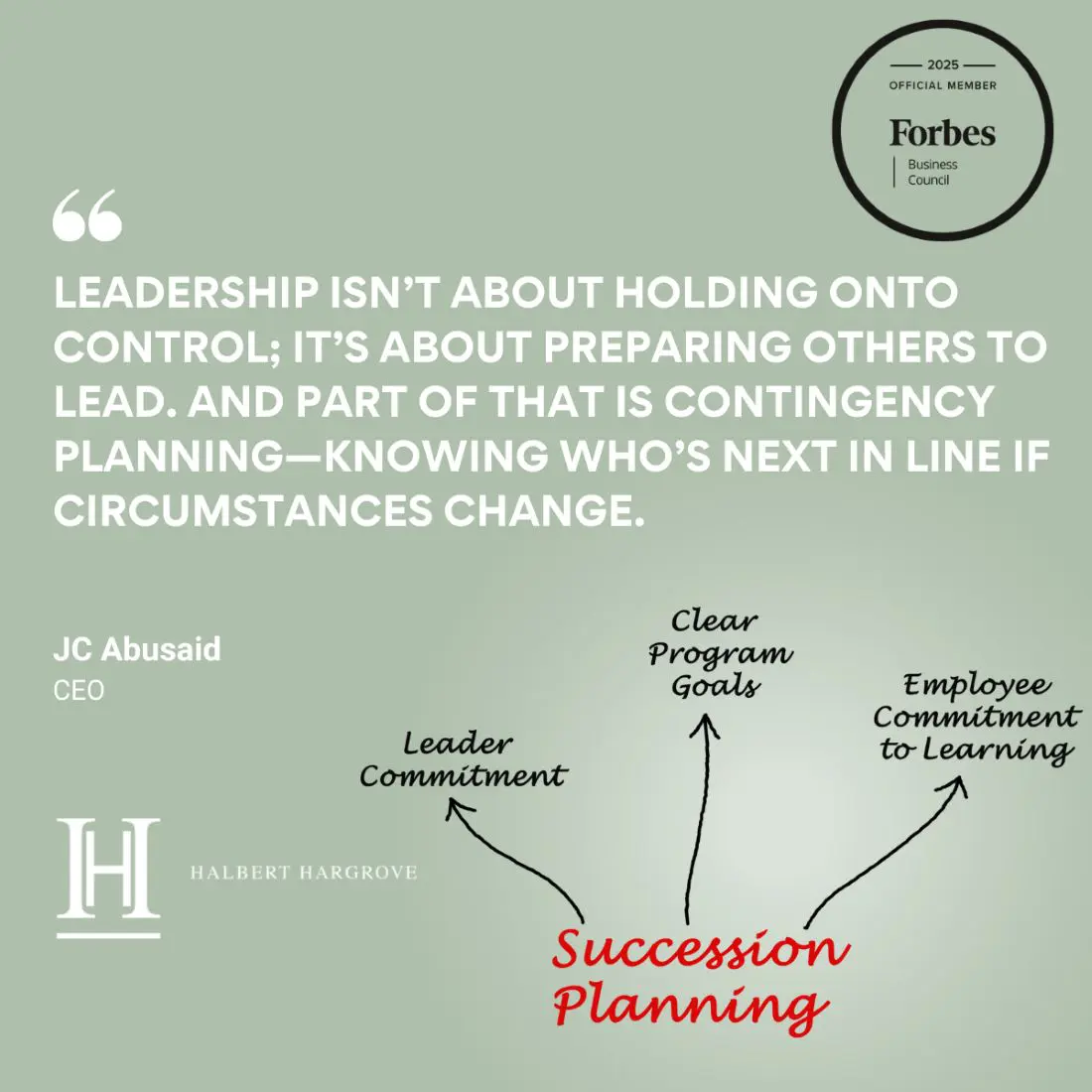
The day you start thinking you’re irreplaceable is the day you start holding your company back. Leadership isn’t about holding onto control; it’s about preparing others to lead. And part of that is contingency planning—knowing who’s next in line if circumstances change.
When firms wait too long to plan, they often have no choice but to hire externally. That can be damaging at the management level, both culturally and operationally. It also sends a message to employees that there’s only so far they can go, and that’s discouraging.
The future of the business and the future of its leadership go hand in hand. You can’t think about the future of a company without considering who’s going to lead it.
Build a future based on trust and longevity.
Communicate. Build trust. Invest in relationships. With the right foundation, the right people often fall into place.
While many companies say developing future leaders is important, only 8% report effective leadership development initiatives. That’s a missed opportunity. The best time to plan for the future is when things are going well and when you have the clarity to do it right.
Succession isn’t about endings. It’s about continuity, confidence and ensuring what you’ve built keeps thriving long after you step aside.