
By David Koch, CFP®, AIF®, CFA, Director of Portfolio Management/Senior Wealth Advisor
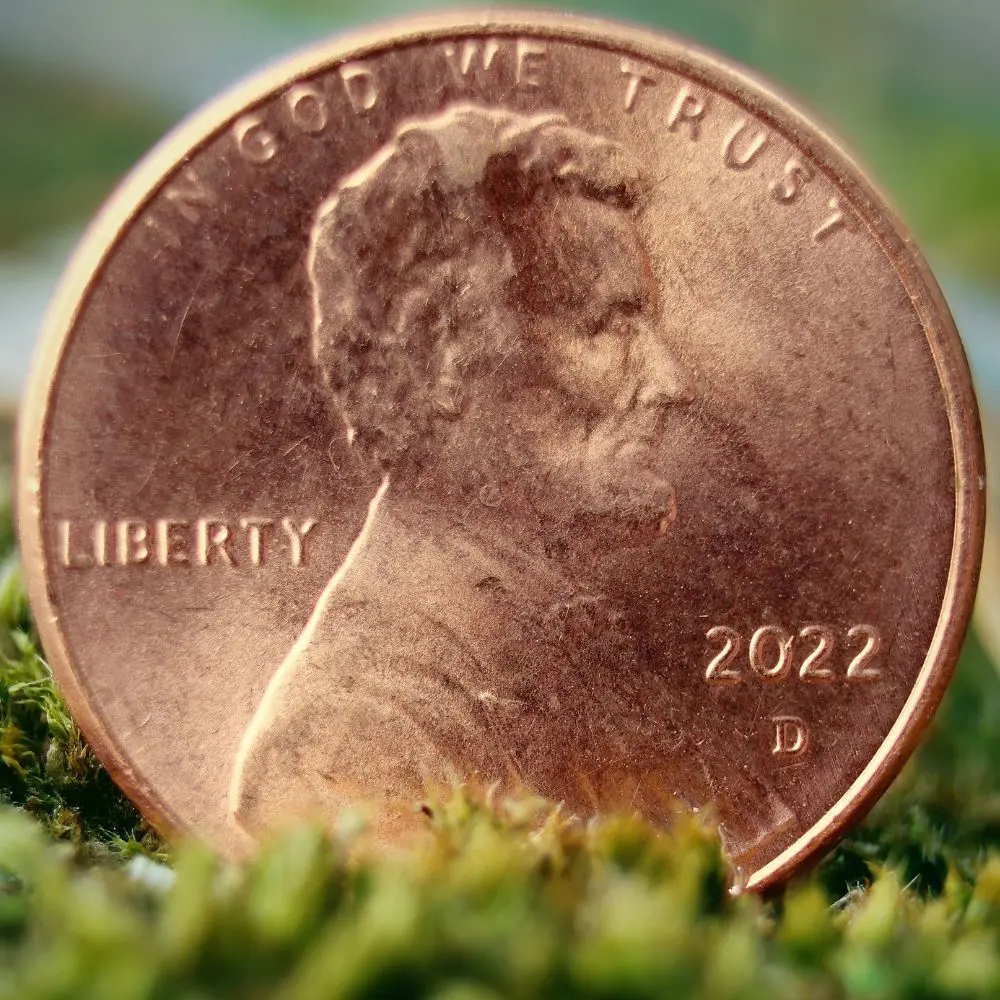
What Happened to the U.S. Penny?
The U.S. Mint struck its last penny on November 12, 2025, officially ending a 232-year run of production. The Treasury Department ordered this following a directive from President Trump earlier in the year.
Why the Penny is Being Discontinued
Each penny costs about 3.7 cents to produce, far more than its face value of one cent. In 2024 alone, the Mint lost roughly $85 million making pennies. Rising metal prices (zinc, and especially copper) have driven costs up for years. This has been an issue for decades and led to a change in the penny’s formulation between 1982 and 1983; as a result, pennies went from being ~95% copper to essentially “flipping” to ~97% zinc with a copper plating.
A modern penny weighs 3.1g, and there are about 453.6g in a pound, so a pound of pennies would be about 147 pennies. Copper futures are trading at about $5.30 per pound. In theory, for every 147 pre-1982 pennies ($1.47), you could melt them down and potentially sell for about $5 (remember they’re only 95% copper) and make roughly $3.50 profit.
Because of this arbitrage, in 2006 the U.S. Mint implemented new regulations making this illegal, with punishments of up to $10,000 and five years in jail, or both.
Thinking about the “other side of the coin,” had the Mint kept the 95% copper penny, the value of the penny would have largely kept up with inflation, with copper alone worth about 3.4 cents per penny. The counterargument is that we value the penny as being 1/100th of a dollar, not the other way around.
Digital payments and inflation have also decimated the penny. Less than 15% of U.S. transactions are made with cash. In my office, I have a framed One Hundred Trillion Dollar bill from the Bank of Zimbabwe. We may be losing the penny, but at least we’re not approaching Zimbabwean inflation.
With its declining value and usefulness, it makes “cents” to do away with it.
“Señor Rich, it’s called Seigniorage”
From Old French seigneuriage (the right of the lord (the seigneur) to mint money), seigniorage is the profit a government makes from creating currency; put another way, it is the difference between face value and production cost. One simple example is that the cost to print a $1 bill is about the same as the cost to print a $100 bill, and the difference between the cost to create the bills themselves and their value is seigniorage.
It costs the U.S. Mint about 13.7 cents to produce each nickel, but we mint 15 times more pennies than nickels, leading to negative seigniorage of roughly $17.7 million in 2024. For perspective, it costs about 5.7 cents to make a dime, about 14.6 cents to make a quarter, and 34.2 cents to make a half-dollar coin (they’re physically bigger).
The Penny’s History is as Cool as Mint
The first U.S. cent was minted in 1787, and in 1792 the U.S. Mint was created. With the Coinage Act that same year, the penny’s value was set at one hundredth of a dollar and required it to contain exactly eleven pennyweights of copper. By March 1793, the new Philadelphia Mint released the first batch of circulating U.S. currency: 11,178 copper cents (that’s right, $111.78 worth of pennies).
They were huge, weighing as much as 2.5 modern quarters, and featured the face of the Roman goddess Liberty on the front and a ring of chains on the back, symbolizing the unification of the colonies. Lincoln was added to the penny in 1909 to commemorate the 100th anniversary of his birth. He was the first widely circulating design of a U.S. President on a coin, an idea that previously seemed too monarchical to be “American.”
A rare 1792 “Birch Cent,” an experimental U.S. penny named after engraver Robert Birch, sold for just over $2.585 million in 2015 to Beverly Hills dealer Kevin Lipton, making it the most expensive penny ever sold. Only about 10 of these historic coins, featuring Miss Liberty and the motto “Liberty Parent of Science & Industry,” are known to exist, with Lipton acquiring the finest known example.
Some 1999 pennies can be worth thousands of dollars, up to $4,500 or more, primarily due to a rare “Wide AM” mint error in which the “A” and “M” in “America” are far apart. Most 1999 pennies aren’t valuable but finding one without a mint mark (no letter like P, D, or S under the date), and with this specific “Wide AM” spacing can make it a rare collectible that that may command a high price at auction. Sometimes it pays to not only “count your pennies,” but to look at them closely as well.
What Happens Without the U.S. Penny?
This isn’t the first time in modern history a country has abandoned its penny. Canada phased out pennies in 2012, but the U.S. pennies remain legal tender, with ~300 billion still in circulation, so they won’t vanish overnight.
For cash transactions, businesses will likely round to the nearest nickel, and retailers may adjust prices to minimize rounding discrepancies (e.g., setting prices at $1.95 instead of $1.99). Point-of-sale systems may need to be updated to automatically apply rounding rules to cash payments as well. Some retailers are already rounding prices or asking for exact change. There’s no federal rounding standard yet, so states may set their own rules.
The end of the U.S. penny reflects the digital world we live in today. Whether you’re holding onto a rare collectible or simply rounding up at the register, the penny’s influence will certainly linger, proving that sometimes, even the smallest things leave big impressions. But that’s just my “two cents”.
Sources:
U.S. Mint – 2024 Annual Report
The penny is going away in early 2026: What it means for you and your one-cent coins
Why was the penny discontinued? U.S. mints last ever penny coins
U.S. mints final penny—why you may want to cash in your coins now
Financial History Issue 121 (Spring 2017)
Penny (United States coin) – Wikipedia
https://www.nbcnews.com/id/wbna13561777
Copper – Price – Chart – Historical Data – News
Disclosure:
Halbert Hargrove Global Advisors, LLC (“HH”) is an SEC registered investment adviser with its principal place of business in Long Beach, California. HH may only transact business in those states in which it is registered, notice filed, or qualifies for an exemption or exclusion from registration or notice filing requirements. Registration does not imply a certain level of skill or training. For information pertaining to the registration status of HH, please contact HH or refer to the Investment Adviser Public Disclosure web site (www.adviserinfo.sec.gov). Additional information about HH, including our registration status, fees, and services can be found at www.halberthargrove.com.
This blog is provided for general information purposes only. No portion of the content serves as the receipt of, or as a substitute for, personalized investment advice from HH or any other investment professional of your choosing. It should not be construed as a solicitation to offer personal securities transactions or provide personalized investment advice. Different types of investments involve varying degrees of risk, and it should not be assumed that future performance of any specific investment or investment strategy, or any non-investment related or planning services, discussion or content, will be profitable, be suitable for your portfolio or individual situation, or prove successful. Neither HH’s investment adviser registration status, nor any amount of prior experience or success, should be construed that a certain level of results or satisfaction will be achieved if HH is engaged, or continues to be engaged, to provide investment advisory services. HH is neither a law firm nor accounting firm, nor does it serve as an attorney, accountant, or insurance agent. No portion of its services, or this content, should be construed as legal or accounting advice. HH does not prepare legal documents or tax returns, nor does it sell insurance products. No portion of the content should be construed by a client or prospective client as a guarantee that he/she will experience a certain level of results if HH is engaged, or continues to be engaged, to provide investment advisory services. All opinions or views reflect the judgment of the author as of the publication date and are subject to change without notice. All information presented herein is considered to be accurate at the time of writing, but no warranty of accuracy is given and no liability in respect of any error or omission is accepted.