By JC Abusaid, CEO/President, featured in Forbes
Key Takeaways
-
Company retreats are a strategic investment, not a perk. When leaders cut in-person gatherings, they risk long-term disengagement, turnover, and cultural drift.
-
Clarity and connection drive performance. Retreats help employees understand where the business stands, how decisions are made, and how their work contributes to results.
-
Recognition strengthens retention. Publicly acknowledging milestones, achievements, and contributions builds loyalty and reinforces company values.
-
Smaller, focused conversations create better outcomes. Separating groups by role and encouraging broader participation leads to more honest dialogue and stronger follow-through.
-
Follow-through determines ROI. The impact of a retreat isn’t the event itself, but what leaders do with the conversations afterward.
For many leaders, company retreats are among the first things questioned when budgets tighten. They can seem like an unnecessary getaway, an extravagance or a luxury when a company is already meeting virtually. I get it; however, what I have learned is that this kind of thinking ignores the true purpose of retreats. Retreats aren’t just about imparting knowledge. Instead, they give people a clearer picture of where the business stands and how their work connects to it, while reinforcing the culture of how the firm works and how people show up for one another. For us, that meant spending less time going through slides and more time talking through how certain decisions are made.
Cancelling your in-person gathering won’t lead to a decline in company results right away. Of course, this happens gradually and is the ripple effect of a lack of teamwork, turnover and employees who complete their tasks with little attachment to the results. Disengaged workers annually cost their companies an estimated $1.9 trillion in lost production.
Making Time Together Count
When retreats try to pack in everything, they rarely leave people with much. Long days packed with presentations and updates can be exhausting, and most people walk away unsure of what they’re supposed to do differently once they’re back at work. Meeting too often can make that worse. Time gets pulled from real responsibilities, and the value of being together starts to blur.
What tends to work better is being more selective. I suggest meeting less often but being clear about why you’re there in the first place. For example, not everyone needs the same conversation.
How people participate matters just as much as what’s on the agenda. At my firm, we noticed that when we separated groups by job title and role, people who typically did not speak much asked better questions and, as a result, made the conversations more honest and transparent. When more voices are participating, the conversation improves, and people are more likely to stay engaged after everyone goes back to their day-to-day work.
Recognition Made The Biggest Impact
If I had to pick one thing that had the biggest impact on employee engagement and retention, I would say recognition. We make a point to recognize our employees during company retreats. We carve out time to acknowledge employees in ways that feel meaningful.
As a result, recognition has become a part of our firm’s core values. Tenures, milestones, certifications, client success, growth points and contributions to the culture are recognized throughout the year, but taking the time to celebrate these moments during retreats is energizing.
Our team looks forward to recognizing their colleagues when we meet as a group twice a year. Hearing real examples of employees helping clients through everyday situations puts things in perspective and gives our work meaning. It’s also why recognition has a real impact on retention. Employees who feel seen and appreciated are far more likely to stay, because they understand not just what they’re doing, but why it matters.
Translating Retreats Into Real Work
A common question is whether retreats actually lead to anything once everyone returns to their desks. That outcome depends less on the event itself and more on what happens afterward.
We’ve never been big on formal surveys. In my experience, the most productive feedback doesn’t come from a form; it comes from conversations. It shows up in side discussions, and the ongoing back-and-forth that happens when people feel comfortable being honest. If your company culture encourages honest conversations, most people don’t hesitate to say what worked and what didn’t. The key is what happens next. That input has to stay alive, not get collected and set aside.
What really keeps things moving is follow-through. If people take the time to share their thoughts, they want to know it mattered. Notes get taken. Patterns start to emerge. Those themes come back up in quarterly updates so people can see what’s changed and what hasn’t. When there’s visible progress, trust builds. When there isn’t, people notice just as quickly.
Transparency plays a bigger role than many leaders realize. People want to understand how the firm is doing and why certain decisions are made, especially when those decisions affect their work.
Why Cost Isn’t The Real Question
Of course, retreats aren’t cheap, but you can’t plan a good retreat if cost is the only factor; the bigger risk is disconnection. Engagement and retention don’t always show up neatly in a budget, but over time, they matter far more than a single line item.
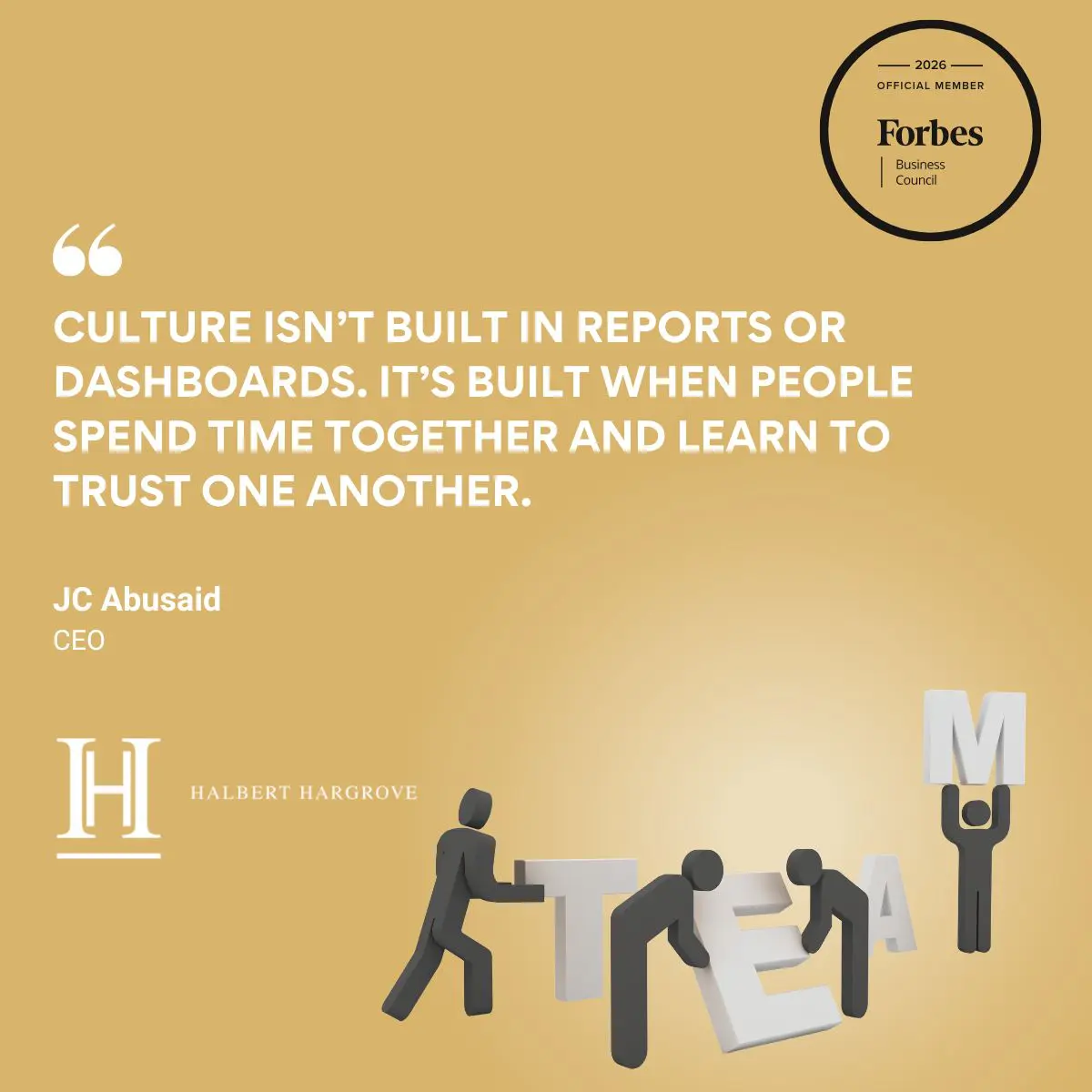
We pay attention to spending, but we don’t shy away from investing in our people. For me, it’s simple. Culture isn’t built in reports or dashboards. It’s built when people spend time together and learn to trust one another.
If you’re still skeptical, the answer usually isn’t to add more meetings or programs. It’s not the slides people remember. It’s the conversation where someone finally speaks up, or the moment a person hears their work described in a way that makes sense.
That’s really the point. Use the time you already have to explain the “why,” listen more than you talk, and recognize the people doing the work. When you do that, culture stops being an idea and starts showing up in how people work the next day.