
Key Takeaways
- Stocks have historically remained the strongest long-term wealth-building asset. Despite periods of volatility, equities have consistently outperformed inflation and other major asset classes over long time horizons.
- Artificial intelligence may increase productivity more than it eliminates jobs. Higher productivity can lead to higher income, stronger spending, and broader economic growth over time.
- Energy independence has reshaped the U.S. economy. Increased domestic oil and gas production has reduced economic vulnerability to energy shocks compared to previous decades.
Why Long-Term Investing Still Matters
Market volatility, inflation concerns, geopolitical uncertainty, and rapid technological change continue to dominate financial headlines. Yet the core principles of long-term investing remain remarkably consistent.
Over the last two centuries, equities have consistently generated stronger real returns than bonds, cash, or gold. While stocks are often viewed as volatile in the short term, long-term market history shows a very different picture. Over extended periods, equities have demonstrated a surprising level of stability in real wealth creation.
That distinction between short-term volatility and long-term compounding continues to shape how many investors think about portfolio construction today.
Stocks and Inflation Have Historically Moved Together
Inflation remains one of the biggest concerns for investors, particularly after the sharp price increases experienced over the last several years.
However, long-term market history suggests that equities have remained one of the strongest inflation hedges available. Stocks represent ownership in real businesses with claims on productive assets, intellectual property, equipment, and earnings that can adjust over time alongside inflation.
Even after decades of cumulative inflation, long-term real equity returns have remained resilient. This helps explain why investors focused on preserving purchasing power often continue to prioritize equities despite periods of economic uncertainty.
Gold’s Role Looks Different Depending on the Starting Point
Gold has experienced periods of strong performance, particularly during times of uncertainty or inflation fears. But its long-term performance depends heavily on the timeframe being measured.
Since the United States fully moved away from the gold standard in the early 1970s, gold has produced meaningful gains during certain periods while also experiencing extended stretches of stagnation. Compared to equities, its return profile has been far less consistent.
For some investors, gold may still serve as a hedge or diversifier within a portfolio. But history shows that its long-term return pattern has differed significantly from the steadier compounding typically associated with equities.
How Energy Independence Changed the Economic Picture
One of the most significant structural shifts in the U.S. economy over the last decade has been the rise of domestic energy production.
The expansion of oil and natural gas production through fracking dramatically changed the country’s position in global energy markets. The United States moved from being heavily dependent on imported energy to becoming a major producer and exporter.
This shift reduced the economic sensitivity to oil shocks compared to previous decades. At the same time, the economy has become far more energy efficient overall, requiring substantially less energy input per dollar of GDP than in the past.
As a result, rising oil prices may still affect consumers and businesses, but the broader economic impact is no longer as severe as it once was.
Consumer Sentiment and Spending Have Diverged
Consumer sentiment surveys remain historically weak, even as economic activity and spending have continued.
This disconnect between how consumers feel and how they behave has become one of the more unusual features of the current environment. While lower-income households have faced greater pressure from inflation and higher costs, consumer spending overall has remained relatively resilient.
At the same time, concerns remain that sustained increases in gasoline or energy prices could eventually begin to weigh more heavily on consumer behavior.
The Potential for AI to Become an Economic Driver
Artificial intelligence has sparked widespread debate about the future of jobs, productivity, and economic growth.
One perspective gaining traction is that AI may function less as a replacement for labor and more as a productivity accelerator. Historically, technological advances that improved productivity also increased income, spending, and overall economic output.
Higher productivity can help workers and businesses to produce more with the same amount of time and resources. That increased efficiency often creates additional demand elsewhere in the economy rather than eliminating it entirely.
Examples from fields such as radiology and accounting suggest that technology frequently changes how work is done without necessarily eliminating the need for skilled professionals. Instead, technology often expands capacity and increases the scale of activity.
AI Adoption May Still Be in the Early Stages
Despite the attention surrounding artificial intelligence, adoption across many industries remains relatively limited.
Much of the potential productivity improvement from AI has yet to be fully implemented. Businesses are still experimenting with how these tools can improve efficiency, reduce costs, and expand capabilities.
As adoption increases, AI could contribute not only to corporate profitability but also to broader economic growth. Even modest improvements in productivity growth could have meaningful long-term effects on GDP and debt sustainability.
Valuations, Growth Stocks, and Market Leadership
U.S. equity valuations remain above historical averages, particularly among large technology and growth-oriented companies.
However, much of that premium reflects strong earnings growth expectations. The dominance of large-cap growth companies has also created one of the longest periods of growth outperformance relative to value investing in modern market history.
While many investors continue debating when leadership may rotate again, predicting exact turning points has remained difficult. Market leadership cycles often persist longer than expected.
Outside the U.S., valuations in many international markets remain lower, reflecting differences in growth expectations, economic structure, and investor sentiment.
Long-Term Perspective Still Matters Most
Short-term market movements often dominate attention, but long-term investing outcomes continue to be driven by compounding, productivity growth, innovation, and valuation discipline.
Market corrections, geopolitical events, inflation concerns, and changing leadership cycles are all part of investing. Over time, however, the broader trend of wealth creation through productive assets has remained remarkably durable.
For long-term investors, maintaining perspective may matter more than trying to predict every short-term market move.
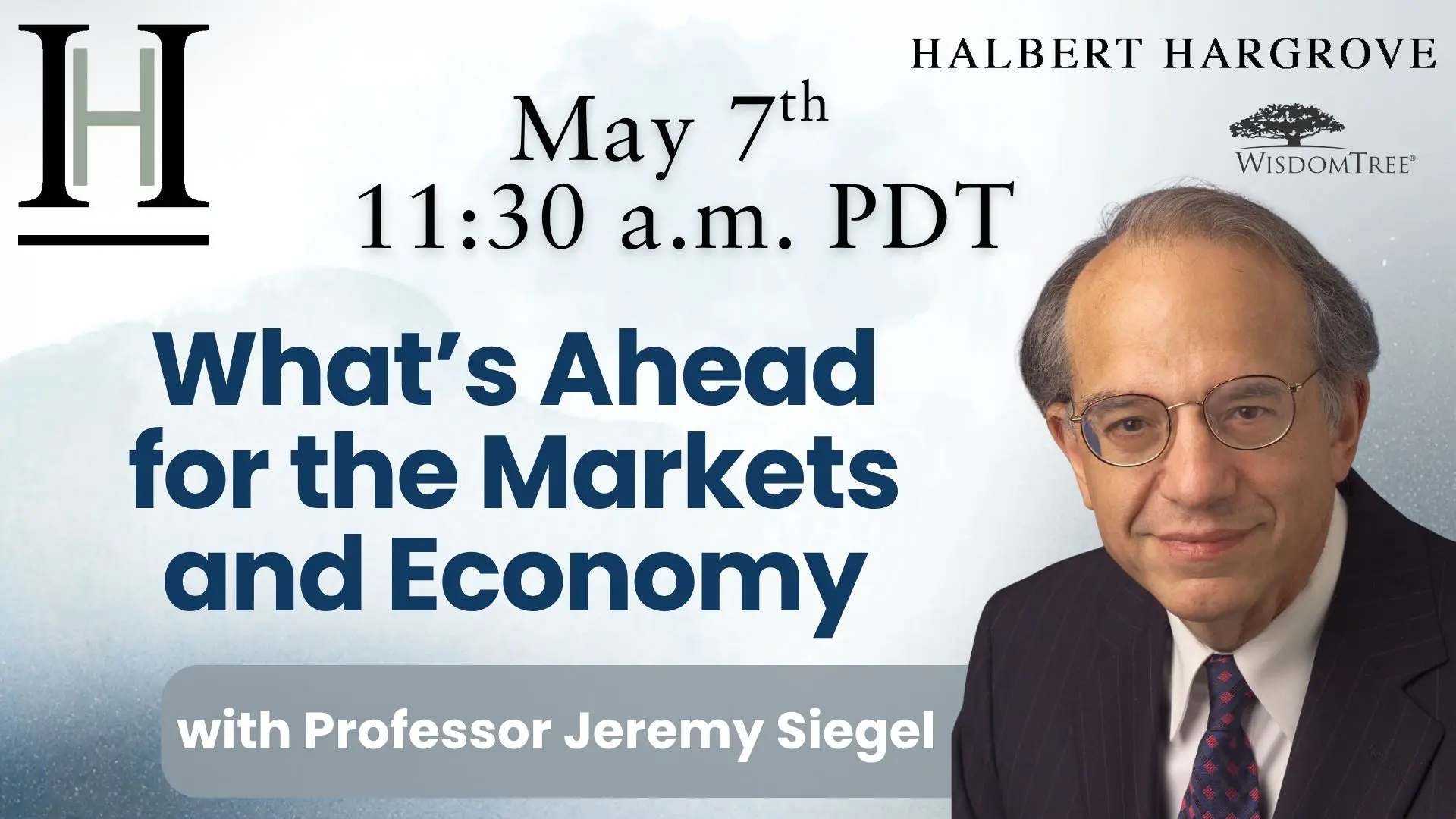
Missed our event with Professor Jeremy Siegel? Watch here!
Halbert Hargrove Global Advisors, LLC (“HH”) is an SEC registered investment adviser with its principal place of business in Long Beach, California. HH may only transact business in those states in which it is registered, notice filed, or qualifies for an exemption or exclusion from registration or notice filing requirements. Registration does not imply a certain level of skill or training. For information pertaining to the registration status of HH, please contact HH or refer to the Investment Adviser Public Disclosure web site (www.adviserinfo.sec.gov). Additional information about HH, including our registration status, fees, and services can be found at www.halberthargrove.com.
This blog is provided for general information purposes only. No portion of the content serves as the receipt of, or as a substitute for, personalized investment advice from HH or any other investment professional of your choosing. It should not be construed as a solicitation to offer personal securities transactions or provide personalized investment advice. Different types of investments involve varying degrees of risk, and it should not be assumed that future performance of any specific investment or investment strategy, or any non-investment related or planning services, discussion or content, will be profitable, be suitable for your portfolio or individual situation, or prove successful. Neither HH’s investment adviser registration status, nor any amount of prior experience or success, should be construed that a certain level of results or satisfaction will be achieved if HH is engaged, or continues to be engaged, to provide investment advisory services. HH is neither a law firm nor accounting firm, nor does it serve as an attorney, accountant, or insurance agent. No portion of its services, or this content, should be construed as legal or accounting advice. HH does not prepare legal documents or tax returns, nor does it sell insurance products. No portion of the content should be construed by a client or prospective client as a guarantee that he/she will experience a certain level of results if HH is engaged, or continues to be engaged, to provide investment advisory services.
The views contained herein are not to be taken as advice or a recommendation to buy or sell any investment. Any forecasts, figures, opinions or investment techniques and strategies set out are for information purposes only, based on certain assumptions and current market conditions and are subject to change without previous notice. There is no guarantee any forward-looking statement will come to pass. All opinions or views reflect the judgment of the author as of the publication date and are subject to change without notice. All information presented herein is considered to be accurate at the time of writing, but no warranty of accuracy is given and no liability in respect of any error or omission is accepted. This material should not be relied upon by you in evaluating the merits of investing in any securities or products mentioned herein. In addition, the Investor should make an independent assessment of the legal, regulatory, tax, credit, and accounting and determine, together with their own professional advisers if any of the investments mentioned herein are suitable to their personal goals. Investors should ensure that they obtain all available relevant information before making any investment. It should be noted that the value of investments and the income from them may fluctuate in accordance with market conditions and taxation agreements and investors may not get back the full amount invested. Both past performance and yield may not be a reliable guide to future performance. Any reference to a market index is included for illustrative purposes only as it is not possible to directly invest in an index.