Key Takeaways
- Care needs evolve over time, which makes proactive planning more effective than crisis-driven decisions.
- Coordinated support across financial, medical, and caregiving professionals can help improve outcomes for both individuals and families.
- Early conversations about preferences and goals makes it easier to honor wishes later on.
A More Complete View of Care Planning
Care is rarely a single event or decision. More often, it unfolds gradually over time, shaped by changing health needs, family dynamics, financial realities, and personal preferences. This progression is often referred to as the continuum of care.
At its best, the continuum of care is not simply about medical support. It is an integrated approach that considers the full picture of a person’s life, including where they want to live, how they want to age, who will support them, and what resources may be needed along the way.
Why Starting Earlier Can Help Create More Options
Many families wait until a health event or sudden change forces difficult decisions around care. By then, choices can feel rushed, emotional, and limited.
Starting earlier helps create more flexibility. It gives individuals time to think through personal preferences, discuss expectations with family members, and align financial resources with future needs. It also allows care decisions to happen gradually rather than during moments of crisis.
As life expectancy continues to increase, more people will require some form of long-term support over time, even if they remain healthy and independent for many years.
The Role of Wellness and Proactive Planning
The earliest stage of the continuum of care is often the least discussed because it begins before there is an obvious need for support.
This phase centers on maintaining independence and preparing for the future. That can include evaluating home safety, establishing baseline medical screenings, improving organization around medications, or simply beginning conversations about long-term goals.
Small adjustments made early can have a meaningful impact later. Improving lighting, reducing fall risks, and addressing mobility concerns proactively can help individuals remain independent longer while reducing avoidable complications.
How Care Needs Change Over Time
Care needs rarely remain static. Over time, support systems often evolve alongside changes in health, mobility, memory, or daily routines.
What begins as occasional assistance may gradually expand into more consistent support with transportation, meals, medication management, or healthcare coordination. In some situations, family members take on caregiving responsibilities. In others, outside professionals become increasingly important.
Because no two situations follow the same path, flexibility matters more than rigid planning. Effective care strategies adapt as circumstances change.
Balancing Independence With Support
For many older adults, remaining at home represents independence, familiarity, and comfort. Aging in place can often be supported successfully when planning begins early, and the right resources are in place.
At the same time, there are circumstances where transitioning into a care community may provide a safer or more sustainable solution. Independent living, assisted living, memory care, and skilled nursing communities each serve different needs depending on the level of support required.
The most effective decisions are guided by personal priorities, quality of life considerations, and realistic long-term planning.
Financial Planning Is Part of the Care Conversation
Care planning is deeply connected to financial planning. As support needs increase, costs can change significantly depending on the type and duration of care involved.
Expenses related to in-home caregiving, home modifications, care management, and residential communities can all affect long-term financial plans. Preparing in advance helps make it easier to evaluate options thoughtfully rather than making decisions under pressure.
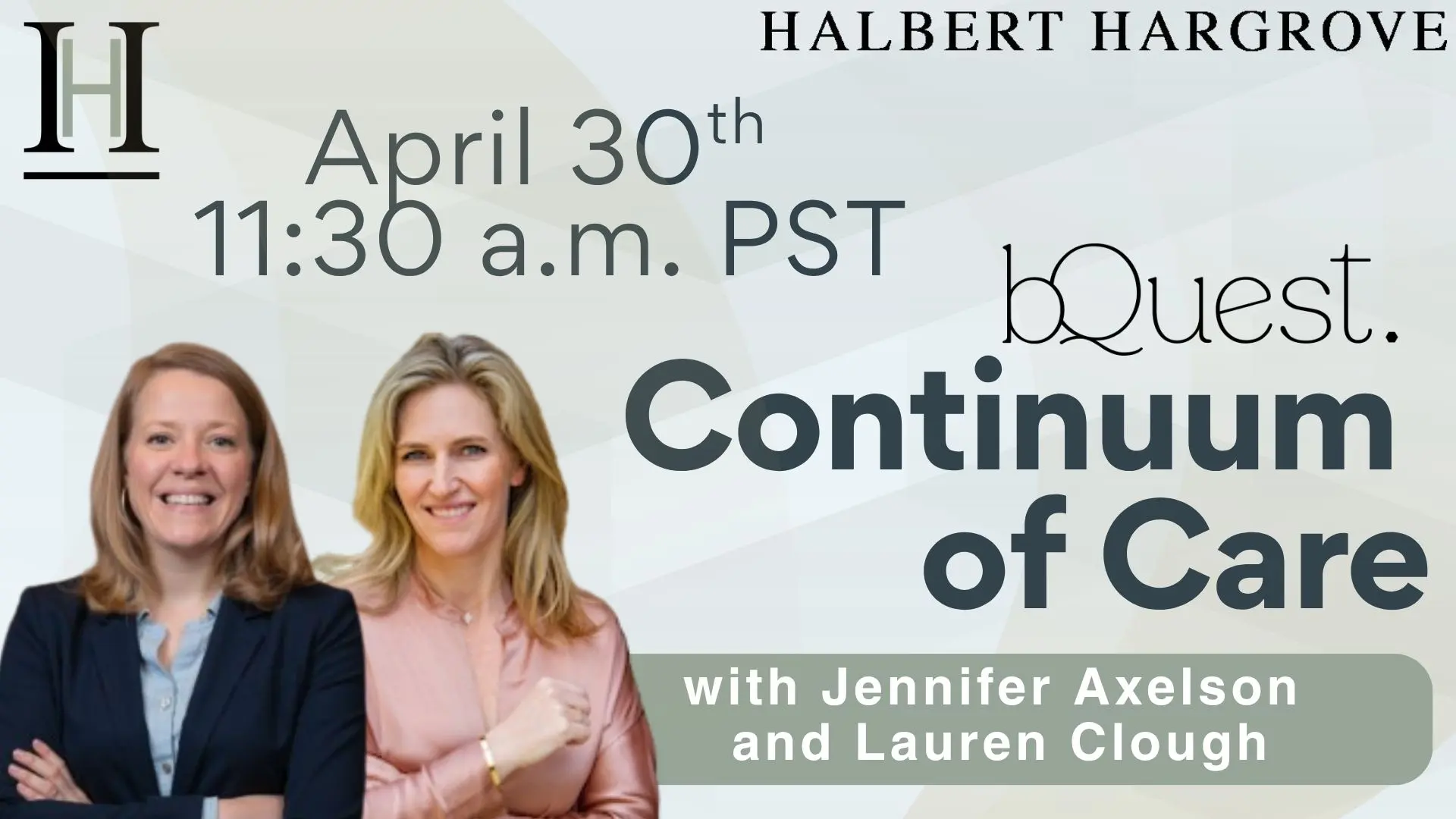
A coordinated approach between financial advisors, care professionals, and family members can help ensure that care decisions remain aligned with both personal goals and available resources. Halbert Hargrove is excited to offer this approach to our clients with bQuest. Missed our event with bQuest on the services they offer? Watch it here.
Halbert Hargrove Global Advisors, LLC (“HH”) is an SEC registered investment adviser with its principal place of business in Long Beach, California. HH may only transact business in those states in which it is registered, notice filed, or qualifies for an exemption or exclusion from registration or notice filing requirements. Registration does not imply a certain level of skill or training. For information pertaining to the registration status of HH, please contact HH or refer to the Investment Adviser Public Disclosure web site (www.adviserinfo.sec.gov). Additional information about HH, including our registration status, fees, and services can be found at www.halberthargrove.com. +
bQuest is an independent entity and not affiliated with HH.
This blog is provided for general information purposes only. No portion of the content serves as the receipt of, or as a substitute for, personalized investment advice from HH or any other investment professional of your choosing. It should not be construed as a solicitation to offer personal securities transactions or provide personalized investment advice. Different types of investments involve varying degrees of risk, and it should not be assumed that future performance of any specific investment or investment strategy, or any non-investment related or planning services, discussion or content, will be profitable, be suitable for your portfolio or individual situation, or prove successful. Neither HH’s investment adviser registration status, nor any amount of prior experience or success, should be construed that a certain level of results or satisfaction will be achieved if HH is engaged, or continues to be engaged, to provide investment advisory services. HH is neither a law firm nor accounting firm, nor does it serve as an attorney, accountant, or insurance agent. No portion of its services, or this content, should be construed as legal or accounting advice. HH does not prepare legal documents or tax returns, nor does it sell insurance products. No portion of the content should be construed by a client or prospective client as a guarantee that he/she will experience a certain level of results if HH is engaged, or continues to be engaged, to provide investment advisory services. All opinions or views reflect the judgment of the author as of the publication date and are subject to change without notice. All information presented herein is considered to be accurate at the time of writing, but no warranty of accuracy is given and no liability in respect of any error or omission is accepted.