Key Takeaways
- Diversification continues to help manage volatility. Portfolios that include a range of asset classes have tended to be more resilient during recent market swings.
- Volatility is normal and expected. Market drawdowns occur regularly, even in positive years, and are part of long-term investing.
- Staying focused on long-term goals matters most. Economic growth, earnings, and disciplined investing have historically driven outcomes more than short-term events.
What Investors Should Keep in Mind About Volatility and Diversification
Markets have experienced a wide range of developments in a short period of time, including geopolitical tensions, rising interest rates, and shifting economic conditions. Despite these challenges, one theme has stood out: diversification has continued to play an important role in helping portfolios navigate uncertainty.
Understanding how different asset classes behave during periods of volatility can help investors maintain perspective and avoid reacting to short-term noise.
Why Diversification Continues to Matter
Even with heightened uncertainty, diversified portfolios have shown resilience. While certain areas of the market experienced declines, others helped offset those movements.
Rather than relying on a single asset class, diversification spreads risk across multiple areas. This approach can help volatility during periods when markets are driven by headlines and rapid changes in sentiment.
U.S. Markets: Valuations and Shifting Leadership
Valuations for U.S. equities have come down from earlier levels, largely driven by price declines rather than changes in earnings. Earnings have continued to grow, which has helped support overall market resilience.
At the same time, market concentration has become an important consideration. A small group of large companies has played a significant role in driving returns in recent years. However, more recent performance has shown signs of broader participation across the market.
This shift highlights the importance of maintaining exposure beyond a narrow set of companies.
Volatility Is a Normal Part of Investing
Periods of market decline can feel uncomfortable, but they are not unusual. Historical data shows that markets frequently experience drawdowns within a given year, even when they ultimately finish positive.
Short-term volatility is part of the trade-off for long-term growth. Investors who remain invested through these periods have historically been more likely to benefit from market recoveries over time.
Opportunities and Valuations Outside the U.S.
International and emerging markets have recently outperformed U.S. equities, and valuations outside the U.S. remain lower by comparison.
These differences can create opportunities for diversification. However, investing globally also introduces currency effects, which can influence returns when converting back to U.S. dollars.
Currency movements can either enhance or reduce returns, depending on the direction of exchange rates.
Fixed Income: Stability During Uncertainty
Fixed income has continued to serve a stabilizing role in portfolios. Even as interest rates have moved higher, bond returns have remained relatively steady.
Income generated from bonds has helped offset price fluctuations, reinforcing their role as a complement to equities in diversified portfolios.
Additionally, opportunities exist beyond traditional bond indexes. A broader approach to fixed income can provide access to different sources of yield and risk management.
Economic Conditions Remain Supportive
The U.S. economy continues to expand, supported largely by consumer spending. Since consumption represents a significant portion of economic activity, employment levels remain an important factor.
Inflation has increased slightly in the short term, driven primarily by energy prices. However, other components such as housing and insurance have shown signs of stabilization.
Globally, economic activity remains in expansion, although conditions vary across regions.
The Role of Alternatives in a Diversified Portfolio
Alternative investments can provide additional diversification and income opportunities. These may include private credit, real estate, infrastructure, and other non-public assets.
While these investments often involve less liquidity, they can help reduce a portfolio’s reliance on public markets and improve overall diversification.
Private credit has received increased attention recently, particularly around direct lending. While certain areas may face challenges, the broader private credit market is more diverse than often portrayed.
Why Headlines Do Not Tell the Full Story
Geopolitical events and market headlines can create short-term volatility, but history shows that markets tend to recover over time.
While these events can influence sentiment and pricing in the near term, long-term outcomes are more closely tied to economic fundamentals and corporate earnings.
Maintaining a long-term perspective can help investors avoid making decisions based on short-term uncertainty.
Staying Focused on Long-Term Outcomes
Market drawdowns, changing leadership, and shifting economic conditions are all part of the investing experience. These dynamics are not signals to abandon a strategy, but rather reminders of why discipline matters.
Over longer time horizons, the likelihood of positive outcomes has historically increased, particularly for diversified portfolios.
Putting Market Insights Into Perspective
Periods of uncertainty can test investor confidence, but they also reinforce the importance of a structured approach. Diversification, patience, and a focus on long-term goals remain central to navigating changing markets.
While short-term events will continue to shape headlines, long-term investment outcomes are typically built on consistency and perspective.
Stay Grounded With a Long-Term Investment Strategy
Periods of volatility can raise questions about what to do next. The Halbert Hargrove team can help you evaluate your portfolio, reinforce your long-term strategy, and help keep your investments aligned with your goals. Connect with your advisor to discuss how current market conditions fit into your overall plan.
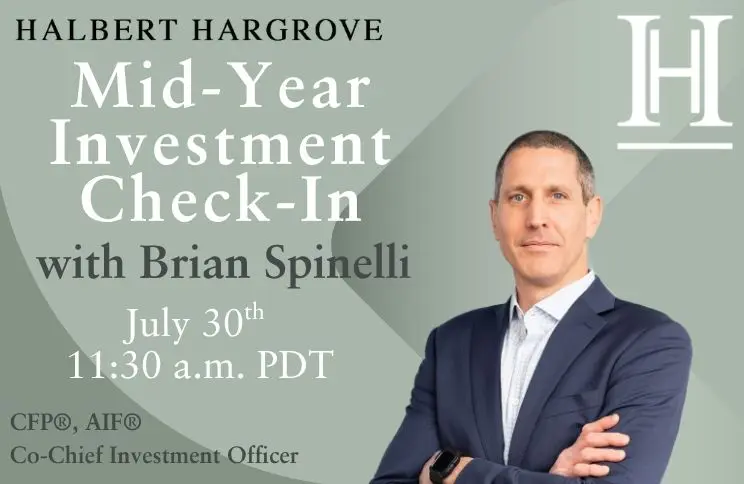
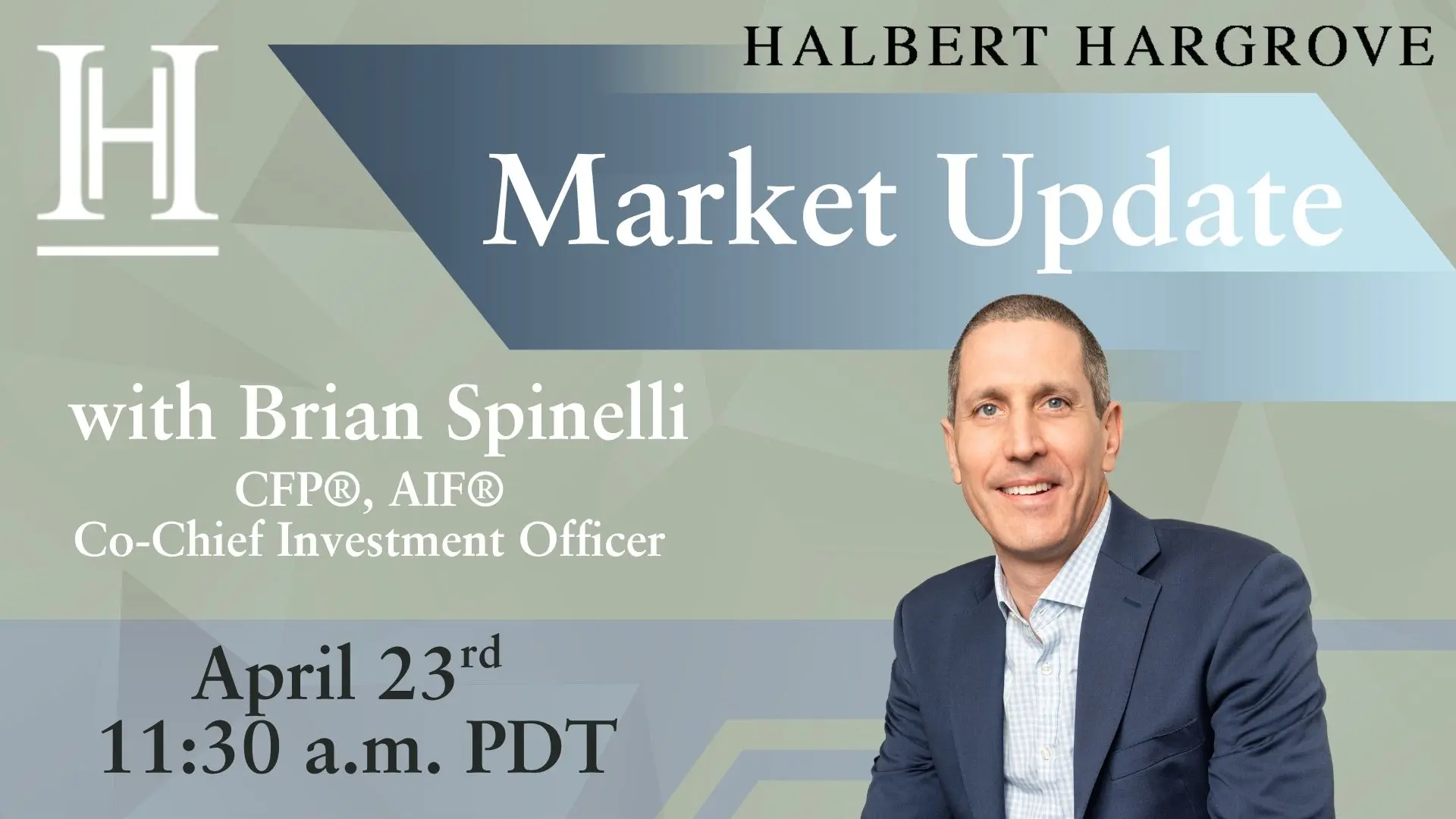
Missed our event? Watch it here.
Halbert Hargrove Global Advisors, LLC (“HH”) is an SEC registered investment adviser with its principal place of business in Long Beach, California. HH may only transact business in those states in which it is registered, notice filed, or qualifies for an exemption or exclusion from registration or notice filing requirements. Registration does not imply a certain level of skill or training. For information pertaining to the registration status of HH, please contact HH or refer to the Investment Adviser Public Disclosure web site (www.adviserinfo.sec.gov). Additional information about HH, including our registration status, fees, and services can be found at www.halberthargrove.com.
This blog is provided for general information purposes only. No portion of the content serves as the receipt of, or as a substitute for, personalized investment advice from HH or any other investment professional of your choosing. It should not be construed as a solicitation to offer personal securities transactions or provide personalized investment advice. Different types of investments involve varying degrees of risk, and it should not be assumed that future performance of any specific investment or investment strategy, or any non-investment related or planning services, discussion or content, will be profitable, be suitable for your portfolio or individual situation, or prove successful. Neither HH’s investment adviser registration status, nor any amount of prior experience or success, should be construed that a certain level of results or satisfaction will be achieved if HH is engaged, or continues to be engaged, to provide investment advisory services. HH is neither a law firm nor accounting firm, nor does it serve as an attorney, accountant, or insurance agent. No portion of its services, or this content, should be construed as legal or accounting advice. HH does not prepare legal documents or tax returns, nor does it sell insurance products. No portion of the content should be construed by a client or prospective client as a guarantee that he/she will experience a certain level of results if HH is engaged, or continues to be engaged, to provide investment advisory services.
The views contained herein are not to be taken as advice or a recommendation to buy or sell any investment. Any forecasts, figures, opinions or investment techniques and strategies set out are for information purposes only, based on certain assumptions and current market conditions and are subject to change without previous notice. There is no guarantee any forward-looking statement will come to pass. All opinions or views reflect the judgment of the author as of the publication date and are subject to change without notice. All information presented herein is considered to be accurate at the time of writing, but no warranty of accuracy is given and no liability in respect of any error or omission is accepted. This material should not be relied upon by you in evaluating the merits of investing in any securities or products mentioned herein. In addition, the Investor should make an independent assessment of the legal, regulatory, tax, credit, and accounting and determine, together with their own professional advisers if any of the investments mentioned herein are suitable to their personal goals. Investors should ensure that they obtain all available relevant information before making any investment. It should be noted that the value of investments and the income from them may fluctuate in accordance with market conditions and taxation agreements and investors may not get back the full amount invested. Both past performance and yield may not be a reliable guide to future performance. Any reference to a market index is included for illustrative purposes only as it is not possible to directly invest in an index.